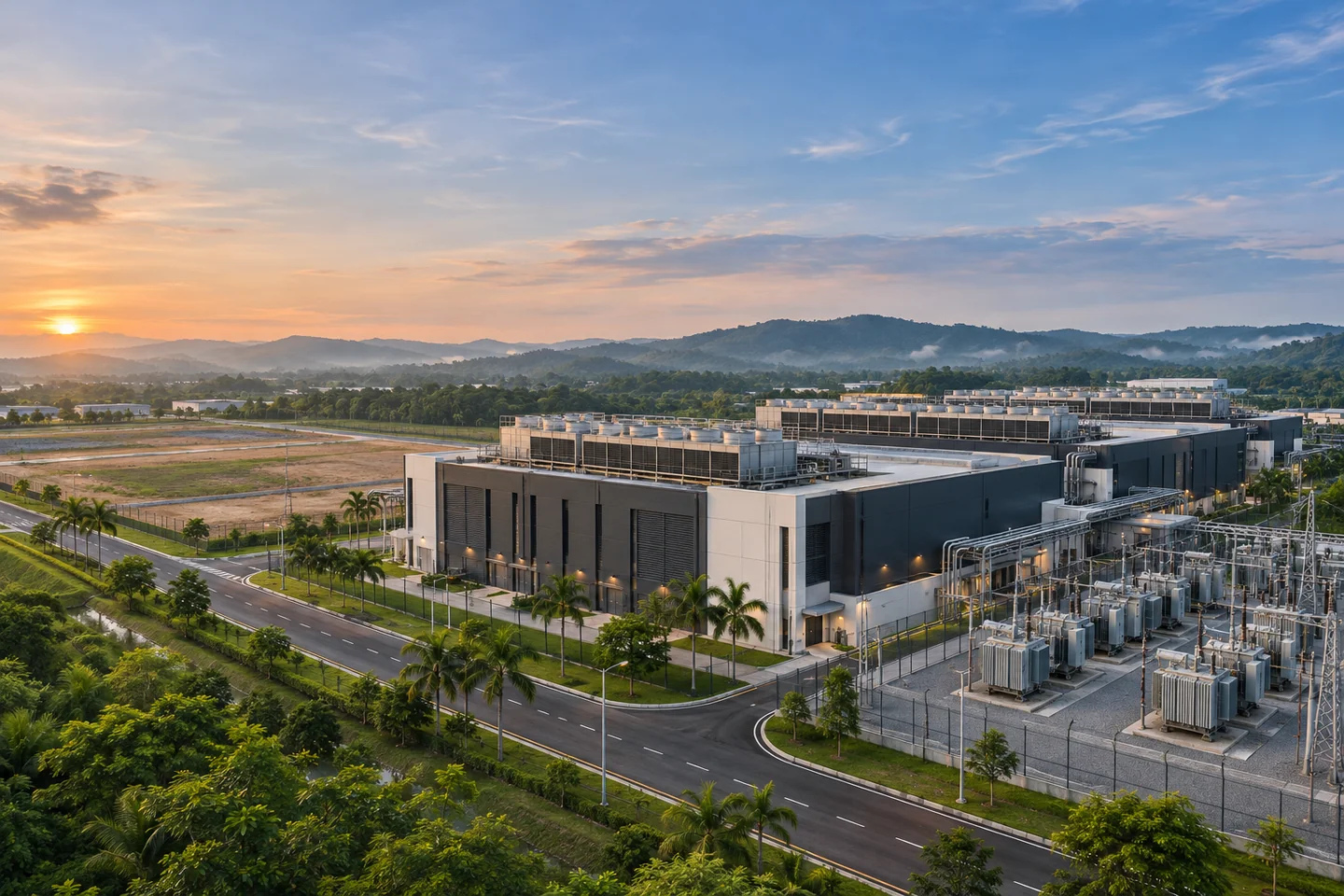
An FIZ is principally associated with export-oriented manufacturing; an FCZ is principally associated with commercial activities such as trading, breaking bulk, grading, repacking and relabelling. The exact activity and goods treatment must be confirmed. Free-zone status comes from gazettement and does not automatically approve a company’s operation, grant land ownership or provide a corporate income-tax incentive.
Choose the customs arrangement around the business
Foreign investors often begin with a request for a free trade zone factory or warehouse. The better first question is what the operation will do. Manufacturing for export, regional stockholding, domestic distribution and after-sales repair can involve different approvals and goods movements.
Describe each process, product and destination before comparing parks. This helps the zone authority and Customs consider the real business model. It also gives property advisers a clearer way to distinguish premises that are operationally suitable from premises that merely carry a free-zone description.
The core distinction: industrial and commercial activities
MIDA describes free commercial zones as locations for commercial activities including trading (excluding retail trade unless specifically approved), breaking bulk, grading, repacking and relabelling. Its guidance presents free industrial zones around export-oriented production and identifies additional value-added activities that may be allowed. Neither description should be treated as unlimited permission for every process.
Use the distinction below to frame an enquiry. If a business combines assembly, distribution and repair, ask the authorities to assess each element. Do not infer that one company’s approval or an adjacent operator’s activity applies to another premises.
| Question | Free Industrial Zone (FIZ) | Free Commercial Zone (FCZ) |
|---|---|---|
| Primary focus | Export-oriented manufacturing and related approved operations | Commercial and logistics-related approved operations |
| Initial property enquiry | Production process, inputs, outputs, utilities and export plan | Goods, storage, handling, trading and destination markets |
| Hybrid activities | Confirm each proposed additional activity | Confirm whether processing or assembly is permitted |
| Evidence needed | Current boundary and company/activity approvals | Current boundary and company/activity approvals |
Verify the legal boundary before relying on a park name
Customs explains that a location becomes a free zone through a declaration in the Federal Gazette. The appointed zone authority administers the designated area. An industrial park brand, a map pin or proximity to a port cannot replace that legal designation.
Request the lot or unit reference, a boundary plan and written confirmation of the applicable zone category. Check these against the current gazette and operator information. For a subdivision, extension or new phase, ask specifically whether the proposed premises fall within the declared area.
Sources: Royal Malaysian Customs Department
Map every movement of goods
Customs treats movements between a free zone and the principal customs area differently from movements wholly within the ordinary domestic area. Its guidance explains the import and export treatment at that boundary. The practical consequences depend on the goods and the applicable legislation, exemptions, restrictions and approvals.
Prepare a flowchart for imported inputs, local purchases, manufacturing, storage, re-export, domestic sales, returns and disposal. Give the flowchart to the appointed customs agent and relevant Customs office. Ask how each leg must be declared, supported and reconciled in the inventory system.
- Identify product descriptions and proposed tariff classifications for review.
- State the proportion and destination of domestic and export movements.
- Identify consumables, machinery and restricted goods separately from trading stock.
- Confirm recordkeeping, stock-control and access requirements before fitting out the unit.
Sources: Royal Malaysian Customs Department · Royal Malaysian Customs Department
Separate customs treatment from the rest of the investment decision
A free-zone location is one part of an investment structure. It does not itself establish the investor’s entitlement to buy land, conduct a regulated business, employ expatriates or claim a corporate income-tax incentive. Confirm those issues through the relevant application routes for the entity and activity.
Keep separate workstreams for company setup, premises use, industry approvals, customs arrangements and any MIDA application. Assign an owner and a required completion point to each. The lease should reflect the dependencies that must be satisfied before a viable operation can begin.
Use official examples without overgeneralising
The Customs online list includes national examples of both zone categories and identifies PKFZ under both FIZ and FCZ. The list’s embedded information carries an August 2023 update date, so it is a starting reference rather than a substitute for current legal and plot-level confirmation.
An investor seeking export manufacturing can begin with relevant FIZ locations, then test the process against available premises and approvals. A distributor can compare FCZ options against off-zone alternatives. A hybrid business should obtain an explicit activity assessment before assuming either category is the better fit.
Sources: Royal Malaysian Customs Department
Compare total operating cost, not the free-zone label
Build a cost comparison around the actual supply chain. Include rent, fit-out, utilities, transport, inventory financing, handling, customs-agent charges, systems and the resources needed for compliance. Show domestic and export scenarios separately so a change in market mix does not hide its operational consequences.
For each shortlisted property, test access to ports, airports and customers using measured routes. Confirm truck circulation, storage capacity, power allocation and building suitability. A customs advantage cannot compensate for a facility that fails the operation’s physical requirements.
A practical decision file for the shortlisted premises
Before a commitment, assemble the proposed activity description, goods-flow plan, exact premises details and the written responses received from the zone authority and Customs. Add the building and planning information, commercial proposal and list of outstanding approvals.
Use that file to brief Malaysian legal, tax and customs advisers. IndustrialPark.my can help structure the location comparison and property enquiry. Final eligibility, goods treatment and operating conditions must be confirmed for the selected business and premises.
Common questions.
Does FIZ or FCZ status mean the company pays no tax?
No. Free-zone customs treatment and corporate income-tax incentives are separate questions. Confirm the treatment of the particular goods, activity and company with Customs and the relevant tax or investment advisers.
Can an FCZ warehouse carry out manufacturing?
Do not assume so. Commercial functions and manufacturing functions must be assessed against the applicable legislation and the operator’s approved activities. Obtain specific confirmation for processing, assembly or other value-added work.
Is the whole of PKFZ one zone category?
Customs lists PKFZ under both FIZ and FCZ. Verify the exact premises, designated category and permitted activities with the zone authority and Customs.
Can a foreign investor buy any property inside a free zone?
Free-zone status does not settle ownership eligibility or state land-consent requirements. Review the proposed title or lease and applicable ownership requirements separately.
Official sources & further reading.
This guide summarises published requirements and location information. Confirm the current rules, approved use and project-specific conditions with the relevant authority and your appointed professional advisers.
- Free Zones Act, Regulations, Orders and gazette notifications Royal Malaysian Customs Department · Accessed 24 November 2026
- Free Zone introduction and goods-movement principles Royal Malaysian Customs Department · Accessed 24 November 2026
- Procedures for establishment and gazettement of free zones Royal Malaysian Customs Department · Accessed 24 November 2026
- Free Zones and Licensed Manufacturing Warehouses; policy booklet chapter 9 Malaysian Investment Development Authority · Accessed 24 November 2026
- List of Free Zones and Free Zone Authorities; embedded list dated 3 August 2023 Royal Malaysian Customs Department · Accessed 24 November 2026
Explore relevant industrial locations.
- Port Klang Free Zone Selangor
- Sama Jaya Free Industrial Zone Sarawak
- Sungei Way Free Industrial Zone Selangor
- Hulu Kelang Free Industrial Zone Selangor
Put these checks into your property brief.
Tell us your activity, preferred location, area, power requirement and occupation date. Our corporate property desk can help focus the property search and identify questions to resolve for the selected site.
Discuss your industrial requirement