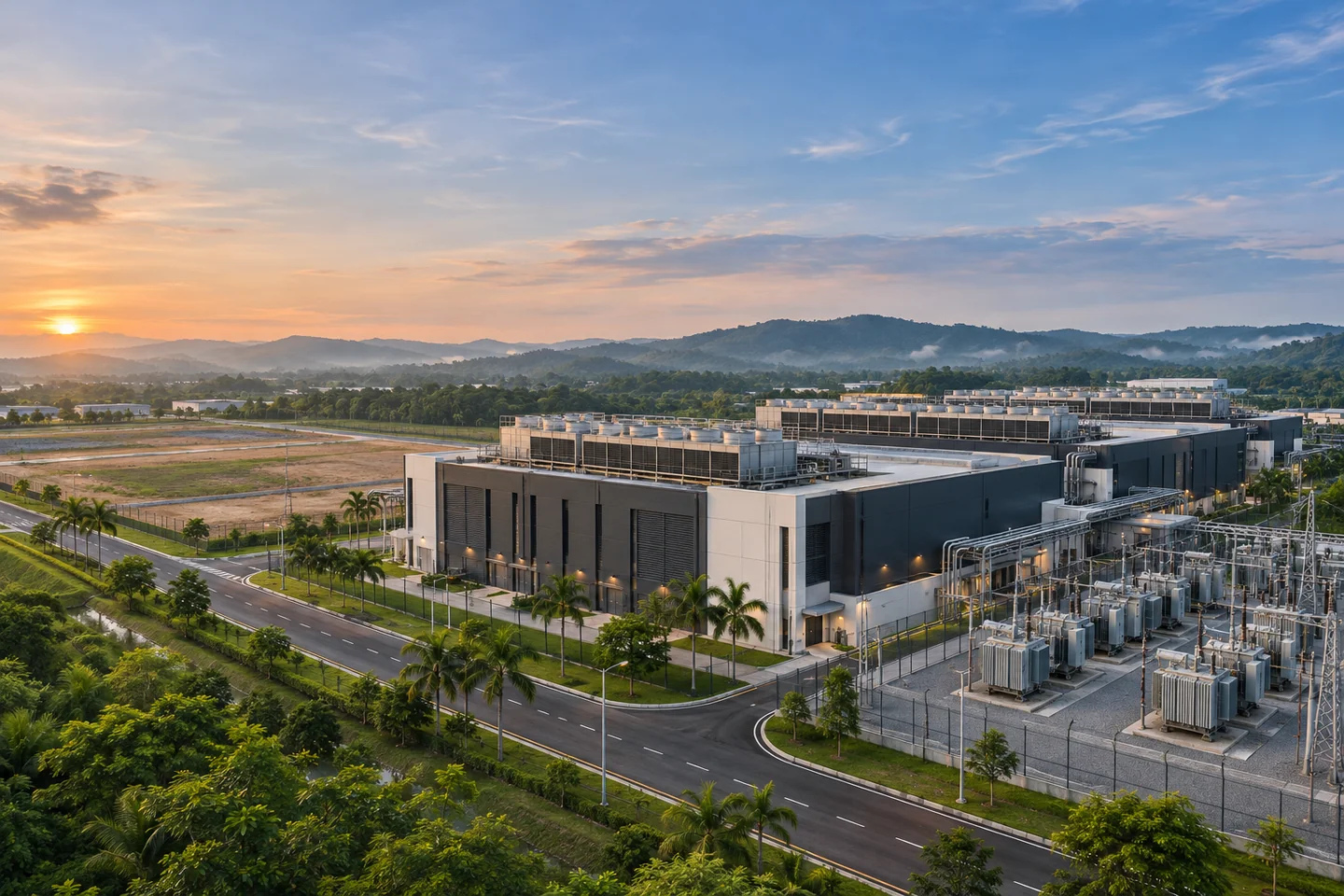
Light, medium and heavy industry are useful planning descriptions, but a property advertisement does not determine whether your process is allowed. Check the title conditions, applicable development plan and activity permissions, then confirm environmental siting, buffers and required approvals for the actual operation.
Start with three different questions
An industrial land title, an industrial zone on a planning map and environmental suitability answer different questions. Treat them as a coordinated review. A site described as “medium industrial” in an advertisement may still be unsuitable for your specific materials, capacity, emissions or operating pattern.
First, inspect the registered title and its conditions with your property lawyer. Next, ask the planning team or local authority which current development plan and activity controls govern the lot. Then test the proposed process against DOE siting guidance and applicable environmental requirements. A single description from an owner or agent cannot settle the whole review.
Sources: PLANMalaysia — i-Plan
What light, medium and heavy manufacturing mean in practice
Planning guidance uses industrial categories to organise compatible development. The exact activities and conditions depend on the relevant plan and authority. Factory size, branding and whether the building is detached do not establish a lawful category.
The comparison below is an operational screening aid. These examples are illustrative, not a statutory classification or confirmation that an activity is allowed on a particular plot.
| Planning description | Typical screening questions | Illustrative operating patterns |
|---|---|---|
| Light manufacturing | Are noise, odour, dust and chemical handling limited? Is assembly genuinely dry and controlled? | Clean assembly, packaging or precision work with limited external effects. |
| Medium manufacturing | What machining, fabrication, heating, coating or wastewater processes are involved? | More substantial production requiring closer review of process controls and neighbours. |
| Heavy manufacturing | What major emissions, energy use, hazardous inventories and off-site risks arise? | Large process industries or intensive production needing a suitably planned location and detailed technical assessment. |
Sources: PLANMalaysia Johor
Use the current environmental siting guidance
DOE’s Notice to EIA Consultant 1/2026, dated 23 January 2026, states that Guidelines on Pollution Prevention in Industrial Siting 2025 (PPIS) supersedes Environmental Essentials for Siting of Industries in Malaysia 2017 (EESIM). Older checklists should therefore be reviewed before being used for a current project.
Environmental classification is concerned with the process and its potential effects. It should not be assumed to match a marketing label or planning category word for word. Have the environmental consultant identify the applicable current guidance and explain what the proposed production activity requires.
Sources: Department of Environment · Department of Environment — Enviro Digital Library
Why a standard buffer-distance chart is not enough
A buffer protects sensitive surrounding uses, but the correct assessment needs a defined process, site boundary and receiving environment. Residential areas, schools, watercourses and neighbouring businesses can change the siting analysis. Building setbacks and environmental buffers also serve different purposes.
Do not purchase land on the assumption that one national distance automatically clears every light, medium or heavy activity. Request the current authority requirements, the relevant planning controls and the consultant’s site assessment. Budget for any land, layout or process changes needed to make the proposal workable.
- Map existing and proposed sensitive uses around the lot.
- Identify where noise, air emissions, odour, discharges and hazardous materials could arise.
- Reserve usable space for treatment systems, access, emergency response and required separation.
- Keep the supporting written assessment with the transaction file.
Sources: Department of Environment · PLANMalaysia Johor
Planning alignment now deserves particular attention
DOE issued Notice to EIA Consultants 2/2026 on 27 October 2026 concerning development-plan evidence for EIA assessment. Its matrix sets out different documentary routes by jurisdiction. For a new industrial proposal, ask the planning and environmental advisers to confirm the current plan position and the written evidence needed for that location.
PLANMalaysia’s i-Plan provides a useful starting point for lot, zoning and land-use information. Its planning-control descriptions distinguish existing use, land categories and activities permitted under the local plan. Follow the map review with confirmation from the responsible planning authority, particularly where a plan amendment or conditional use is involved.
Sources: Department of Environment · PLANMalaysia — i-Plan
A shortlist checklist for Selangor, Johor and Penang
Prepare one process brief and use it consistently across shortlisted parks. State the products, raw materials, production steps, planned throughput, machinery, storage volumes, utilities, waste streams and operating hours. This gives the authority and consultant something concrete to assess.
For a site in Klang or Pulau Indah, Johor’s manufacturing corridors, or Batu Kawan and Kulim’s wider northern cluster, compare the actual lot and operation. A park’s sector positioning is useful context; it is not evidence that every tenant process is approved. Sabah and Sarawak require their own applicable land, planning and environmental checks.
- Obtain the title search, approved layout, relevant planning conditions and building occupation record.
- Seek written feedback on the proposed activity, including any change-of-use requirements.
- Screen EIA and other environmental obligations separately.
- Confirm power, water, drainage, fire access and waste-treatment feasibility.
- Agree approval conditions and responsibility for required works before an unconditional commitment.
Sources: PLANMalaysia — i-Plan · Department of Environment
Common questions.
Can a light-industry factory accommodate chemical processing?
That depends on the actual process, quantities, planning conditions and environmental assessment. Do not assume the existing building category allows it; seek written authority and professional confirmation.
Does an industrial title prove my business activity is permitted?
The title is one part of the review. Applicable planning use, environmental suitability and operating permissions still need to be checked for the proposed process.
Are light, medium and heavy categories identical across Malaysia?
Use the terminology and activity controls adopted for the relevant state and local authority. Environmental process classifications must also be assessed separately.
Can a change of use solve an unsuitable zoning position?
A planning professional can assess whether an application is available and what other approvals are affected. Approval should not be assumed or built into a guaranteed occupation date.
Official sources & further reading.
This guide summarises published requirements and location information. Confirm the current rules, approved use and project-specific conditions with the relevant authority and your appointed professional advisers.
- Planning-control and zoning information PLANMalaysia — i-Plan · Accessed 5 November 2026
- Industrial planning categories and site considerations; local guidance context PLANMalaysia Johor · Accessed 5 November 2026
- Notice 1/2026: implementation of PPIS 2025 Department of Environment · Accessed 5 November 2026
- PPIS 2025 official publication record Department of Environment — Enviro Digital Library · Accessed 5 November 2026
- Notice 2/2026: development-plan evidence for EIA Department of Environment · Accessed 5 November 2026
Explore relevant industrial locations.
- Pulau Indah Industrial Park Selangor
- Batu Kawan Industrial Park Penang
- Kulim Hi-Tech Park Kedah
Put these checks into your property brief.
Tell us your activity, preferred location, area, power requirement and occupation date. Our corporate property desk can help focus the property search and identify questions to resolve for the selected site.
Discuss your industrial requirement